Key Takeaways
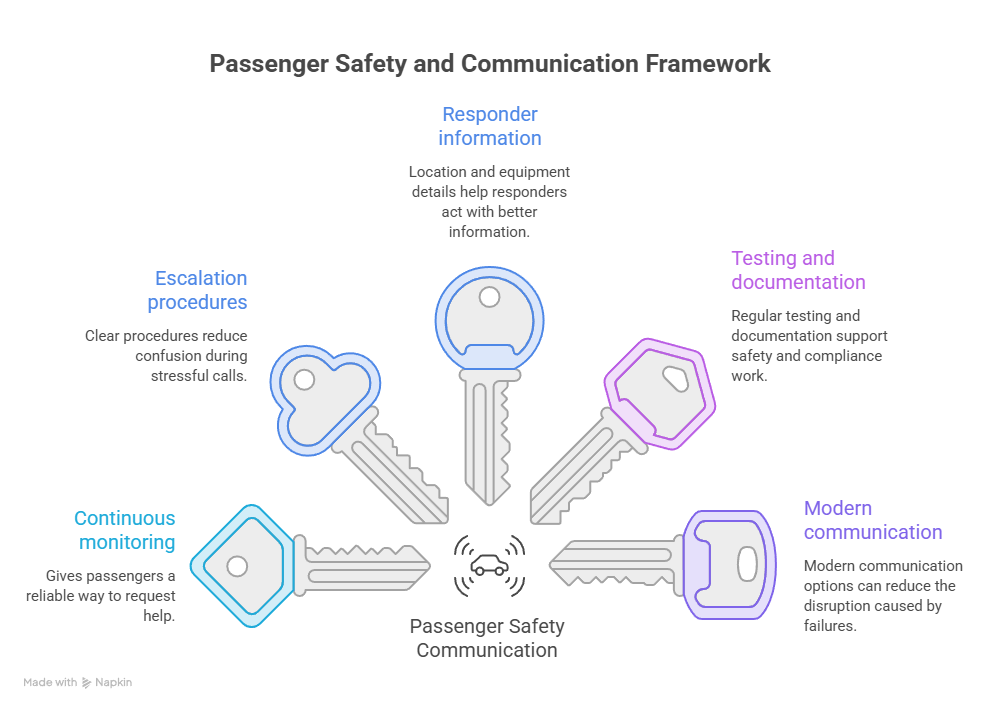
Elevator monitoring services help building teams maintain a dependable line of communication when an elevator passenger needs assistance. The right arrangement also clarifies who responds, what information is collected, and how quickly help is dispatched.
- Continuous monitoring gives passengers a reliable way to request help.
- Clear escalation procedures reduce confusion during stressful calls.
- Location and equipment details help responders act with better information.
- Regular testing and documentation support safety and compliance work.
- Modern communication options can reduce the disruption caused by failures.
Why Elevator Monitoring Services Are Critical for Building Safety
An elevator is usually quiet and routine, but a stalled car can quickly become a serious safety concern. Passengers need to reach a live responder, and building staff need a process that does not depend on someone noticing the problem by chance. Elevator monitoring services create that direct connection and make emergency communication part of the building’s operating plan.
A monitored elevator phone is more than a device mounted in a car. It is a communication route that should be answered, identified, and managed according to established procedures. A service such as this elevator phone monitoring service can support immediate voice communication and dispatch while helping building teams address ASME and ADA requirements described on the service page.
The value extends beyond a single emergency. When calls are handled consistently, property managers can keep clearer records, coordinate with technicians, and reduce the uncertainty that often turns a small equipment issue into a prolonged disruption. A dependable response path protects passenger confidence while giving staff a practical foundation for follow-up.
Before choosing an elevator monitoring company, building owners should consider the operating details that affect real-world performance:
- Whether calls reach live operators around the clock.
- How the service identifies the building and elevator involved.
- Which emergency and non-emergency escalation steps are available.
- How call records, testing, and follow-up are documented.
These questions separate a monitored communication process from a phone line that simply rings somewhere. They also help a building team compare elevator monitoring solutions on response quality rather than on equipment labels alone.
How Elevator Monitoring Services Improve Emergency Response
During an elevator incident, a calm and orderly exchange matters. The passenger may be frightened, unable to describe the location clearly, or unsure whether anyone has heard the call. A live operator can gather essential details, reassure the caller, and follow the building’s defined escalation process instead of leaving the passenger to repeat the situation to several people.
Useful response depends on more than answering speed. Operators need enough information to determine which building, elevator, and situation are involved, then relay that information to the appropriate contact. The elevator emergency response guide describes a service model built around handling passenger entrapments, medical incidents, and maintenance requests with trained operators and clear protocols.
That structure can help reduce avoidable delays. A response record should make it easier to understand what was reported, whom the operator contacted, and what action followed. For buildings with several properties or rotating technicians, a defined handoff is especially valuable because it keeps urgent information from being lost between shifts.
The following comparison illustrates what a building team should be able to see when evaluating a monitoring arrangement:
| Response element | Practical question | Why it matters |
|---|---|---|
| Call handling | Is a live operator available when the call arrives? | Passengers receive an immediate human response. |
| Location identification | Can the operator determine the relevant building and elevator? | Technicians and emergency contacts receive usable details. |
| Escalation | Are contacts and steps defined in advance? | Staff do not have to improvise under pressure. |
| Documentation | Are calls and actions recorded for follow-up? | Managers can review incidents and improve procedures. |
A table like this is useful during vendor discussions because it turns broad promises into operational questions. It also keeps the focus on the complete response chain, from the first voice connection through dispatch and post-incident review.
Key Features to Look for in Elevator Monitoring Services
The best elevator monitoring solutions fit the building’s actual needs rather than forcing every property into the same script. A small commercial building may need a straightforward emergency contact sequence, while a larger portfolio may require property-specific instructions and several levels of escalation. The service should be clear enough for operators to follow and flexible enough for managers to maintain.

Insta Answer provides 24/7 elevator answering services for property managers and elevator repair companies. Its documented approach includes trained operators who follow specific scripts and escalation steps, covering calls ranging from emergency entrapments to routine maintenance inquiries. Those capabilities make it relevant when a building needs human call handling that follows its own procedures.
A careful review should cover availability, information handling, and the relationship between monitoring and dispatch. Ask how the provider receives updated contact details, how operators distinguish urgent from routine requests, and how the building receives information after a call. A service that cannot explain these basics may create more administrative work even if it answers the phone.
For a practical evaluation, request clear answers about:
- 24/7 staffing and the handling of missed or silent calls.
- Customized scripts, contacts, and escalation steps.
- Communication with on-call technicians or building personnel.
- Call records, reporting, and routine testing procedures.
These features should be evaluated together. Availability without accurate escalation can still produce delay, while detailed reporting is of limited value if no one responds promptly. A building team can also request support to discuss the service requirements that apply to its properties.
Why Modern Elevator Monitoring Services Outperform Traditional Systems
Traditional arrangements often place too much responsibility on a basic telephone connection and too little on the response process behind it. If the line reaches the wrong destination, relies on outdated infrastructure, or lacks current contact information, the equipment may appear functional while the overall safety process remains weak. Modern elevator monitoring services treat communication, identification, and response as connected parts of one system.
Modernization also gives owners a reason to review how passengers communicate during an emergency. The modern elevator monitoring overview explains how advanced monitoring systems can support elevator safety, efficiency, and reliability. The point is not to add technology for its own sake; it is to create a more dependable route from a passenger’s call to the people responsible for assistance.
Insta Answer provides 24/7 call support for elevator repair businesses, including rapid response for elevator entrapments and routine repairs. Its operators can relay vital information to technicians, and the documented service includes customized solutions, live chat, and social media support. For an organization managing a repair workflow, those stated capabilities can complement the communication needs around elevator service without turning them into unverified performance guarantees.
A modern review should therefore consider the full lifecycle of communication: installation or configuration, testing, contact updates, incident handling, and reporting. It should also account for accessibility and privacy when video or visual communication is being considered. Technology improves the process only when the people, procedures, and maintenance around it remain current.
Get Started With Reliable Elevator Monitoring Services Today
Selecting a monitoring service begins with a straightforward inventory. Record each elevator’s location, existing phone arrangement, emergency contacts, service provider, and testing schedule. This information gives a prospective elevator monitoring company enough context to explain what must be configured and where a building’s current process may be exposed.
Insta Answer provides 24/7 elevator answering services and offers flexible plans described in its service information, with support for emergency and routine calls. Property managers can use an initial conversation to clarify scripts, escalation contacts, technician communication, and reporting rather than assuming that every site requires an identical setup.
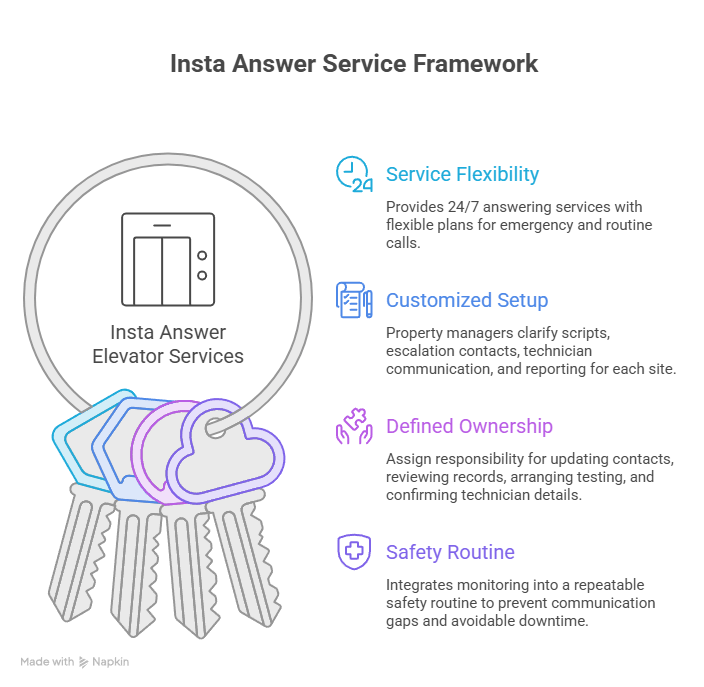
The next step is to establish ownership. Decide who updates contact information, who reviews call records, who arranges routine testing, and who confirms that technicians received the relevant details. With those responsibilities documented, elevator monitoring services become part of a repeatable safety routine instead of an isolated vendor purchase. That preparation can help prevent communication gaps before they contribute to avoidable downtime.
Talk With a Specialist
Discuss your building’s elevator communication needs with a service team that can explain coverage, response procedures, and setup requirements. A focused conversation is a sensible way to determine which monitoring arrangement fits your properties.
Conclusion
Elevator monitoring services support safer buildings by giving passengers a reliable communication route and giving property teams a defined response process. Careful attention to live coverage, location details, escalation, documentation, and ongoing testing can reduce uncertainty when an incident occurs. When those pieces work together, monitoring becomes a practical part of preventing avoidable downtime.
Frequently Asked Questions
What are elevator monitoring services?
Elevator monitoring services connect elevator emergency calls with trained responders who can communicate with passengers, identify the relevant equipment, and follow an established escalation process.
Why is live elevator phone monitoring necessary?
Live elevator phone monitoring helps ensure that a passenger’s call reaches a person who can respond, gather information, and contact the appropriate building or emergency resource.
Do monitoring services handle routine calls too?
Some services handle both emergency and non-emergency requests, such as routine maintenance inquiries. The exact scope should be confirmed before service begins.
How can monitoring reduce elevator downtime?
Monitoring can reduce communication delays by passing accurate incident details to the appropriate contact. Faster information flow may help technicians begin assessment sooner, although equipment repair time varies by situation.
What information should an operator collect?
An operator may need the building location, elevator identity, nature of the problem, passenger condition, and any details required by the property’s escalation procedure.
How often should an elevator phone be tested?
Testing should follow applicable requirements, the equipment manufacturer’s guidance, and the building’s maintenance procedures. Records should be kept so missed or failed tests can be addressed.
What should a property manager ask a monitoring provider?
Ask about staffing hours, customized protocols, escalation contacts, call documentation, testing support, technician communication, accessibility, and the process for updating site information.